Bhutan Festival Guide
Discover Bhutan's most spectacular Tsechus and cultural festivals, from grand monastery celebrations to intimate local traditions, with insights into when and where to experience them.

A Year of Colour, Dance and Sacred Celebration
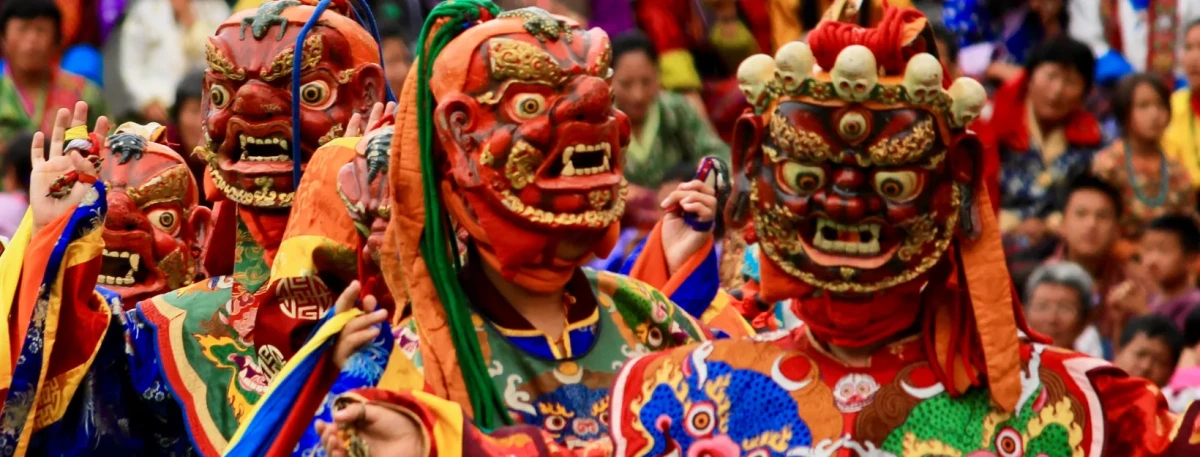
Few travel experiences rival a Bhutanese festival in full swing. Known locally as Tsechus, these vibrant Buddhist celebrations light up monasteries and courtyards across Bhutan every year. A swirl of masked dances, live music, ancient teachings and centuries-old ritual creates vibrancy. At their heart, Tsechus honour Guru Rinpoche, the revered master who brought Buddhism to Bhutan, and mark the turning of the sacred year. Because they follow the lunar Buddhist calendar, dates shift from year to year, so timing your visit takes a little planning (and it's well worth it).
Some Bhutan festivals have become bucket-list events, drawing travellers from around the world. Others stay quietly local…. intimate, uncrowded and unforgettable for those who seek them out. Below, we've gathered a selection of Bhutan's most memorable festivals (by no means all of them) to help you experience the Kingdom's living culture, wherever and whenever you travel.
The Big Two: Thimphu and Paro Tsechu
Thimphu Tsechu
Held each year in early October, Thimphu Tsechu is the largest celebration of them all. For over three days, thousands gather in the courtyards of Tashichho Dzong, which is Thimphu's magnificent central monastery and seat of government. This festival has unfolded here since 1670.
Its rituals are said to have been established in the 17th century by Zhabdrung Ngawang Namgyal, the great unifier of Bhutan, to honour the deeds of Guru Rinpoche and to bless the land with prosperity and protection. Across the days, monks bring the life and legends of Guru Rinpoche vividly to life through slow, stylised masked dances. Each of their movement steeped in meaning, each performance a form of living prayer.
Paro Tsechu
As spring arrives in mid-April, the historic Rinpung Dzong becomes the stage for one of Bhutan's most beautiful festivals. Over five days, Paro Tsechu unfolds against a backdrop of fortress walls and mountain air, its most striking moment perhaps the Dance of the Black Hats. This is a dramatic re-enactment of Padmasambhava's triumph over the forces of evil.
But it's the final morning that draws the deepest reverence. At dawn on the closing day, monks unfurl the thongdrel which is a colossal embroidered thangka depicting the saint across the face of the dzong. Believed to purify sins and bestow good fortune, this sacred image is revealed only briefly before being carefully rolled away, and simply witnessing it is said to bless all who look upon it.
Can be combined with Bhutan - Kingdom in the Clouds.
Haa Summer Festival
Tucked into one of Bhutan's most beautiful and least-visited corners, the Haa Summer Festival is a celebration of nomadic life in all its warmth and rowdiness. Held in early July in Haa township, at the heart of the pristine Haa Valley, it's less about monastery ritual and more about people….herders, farmers and families coming together for two days of food, sport and song.
Expect traditional Bhutanese archery and khuru (dart-throwing), folk dances passed down through generations, yak-herding demonstrations, and a spread of regional dishes you won't easily find elsewhere in the country. And flowing through all of it: ara, the local spirit distilled from rice or barley, poured generously and refused at your peril.
One practical note — early July falls squarely in Bhutan's monsoon season, so pack a waterproof and accept that you'll probably get wet. Most who go will tell you it's a small price for a festival this genuinely local.
Can be combined with Journey Through Bhutan: Culture, Nature and Himalayan Heritage.
Punakha Drubchen and Punakha Tsechu
 Two festivals, back to back, in one of the most photogenic settings in the Himalayas. Held in early March at the majestic Punakha Dzong, where the Pho Chhu and Mo Chhu rivers meet, the pair run consecutively for six days of ceremony, spectacle and prayer. First comes the three-day Punakha Drubchen, unlike anything else in the Bhutanese festival calendar. Its centrepiece is the Serda. It is a magnificent procession re-enacting Bhutan's 17th-century victory over invading Tibetan forces, with local men dressed as the pazaps, the warrior militia who once defended the valley, moving through the dzong courtyard in a moment of national history turned living theatre.
The Punakha Tsechu follows immediately in the same courtyard. A relative newcomer, introduced in 2005, it was established to preserve the noble deeds of Zhabdrung Ngawang Namgyal through prayer, masked dance and pilgrimage.
Can be combined with Bhutan - Kingdom in the Clouds.
The Matsutake Festival
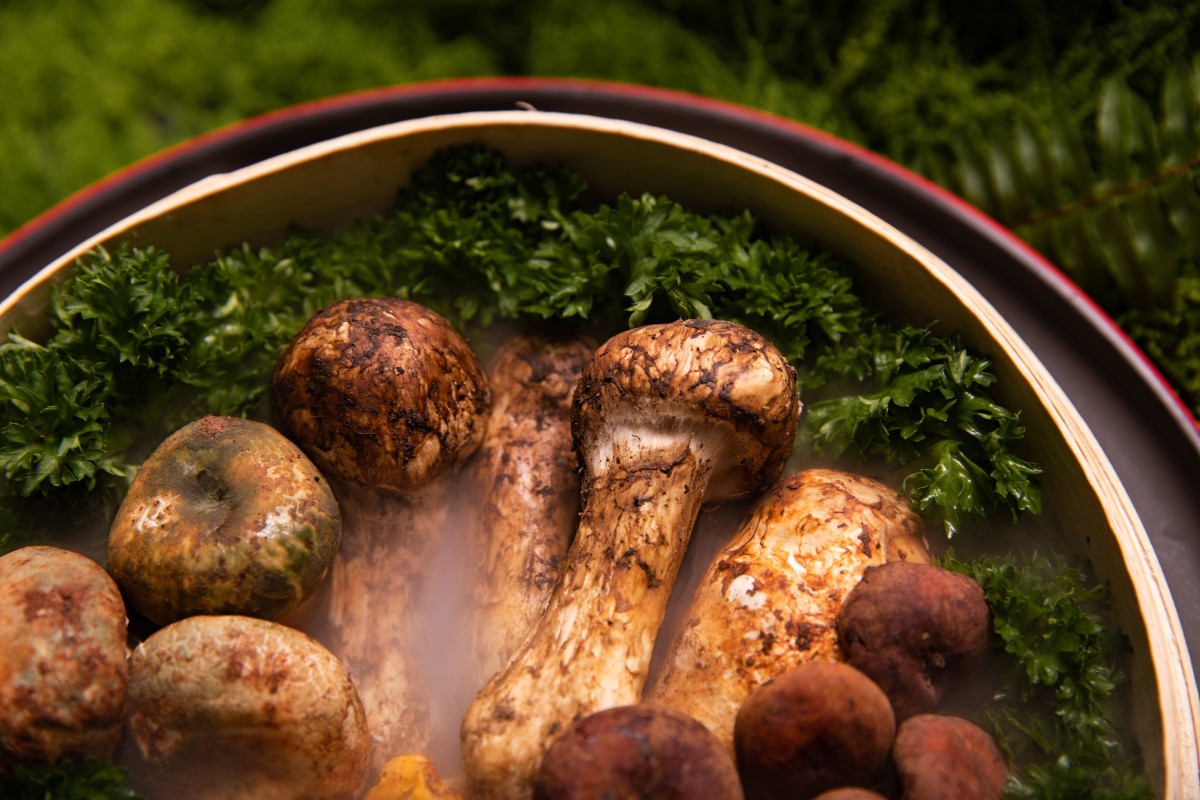
And now for something completely different….a festival devoted entirely to a mushroom.
Held in late August on the festival ground at Ura, deep in the Bumthang region, the Matsutake Festival marks the opening of mushroom season with two days of feasting, folk song and unhurried village life. The prized matsutake, one of the world's most sought-after mushrooms, grows wild in the pine forests here, and the whole valley celebrates its arrival.
This is a festival you take part in rather than watch. Join locals on foraging excursions through pristine woodland, learn to spot the mushrooms yourself, then bring your haul back to cook alongside village families and sample matsutake specialities in every form. In between, there are songs, dances and village sports to throw yourself into.
Set against the wide, quiet beauty of the Ura Valley, it's the perfect antidote to the grand ceremony of the dzong festivals.
Can be combined with The Spirit of Bhutan: A Himalayan Journey.
The Black-Necked Crane Festival
Few birds are as cherished in Bhutan as the black-necked crane. Each autumn, these elegant, endangered visitors sweep down from the Tibetan plateau to winter in the glacial Phobjikha Valley. Bhutan welcomes them the way it welcomes anything sacred: with dance, song and celebration.
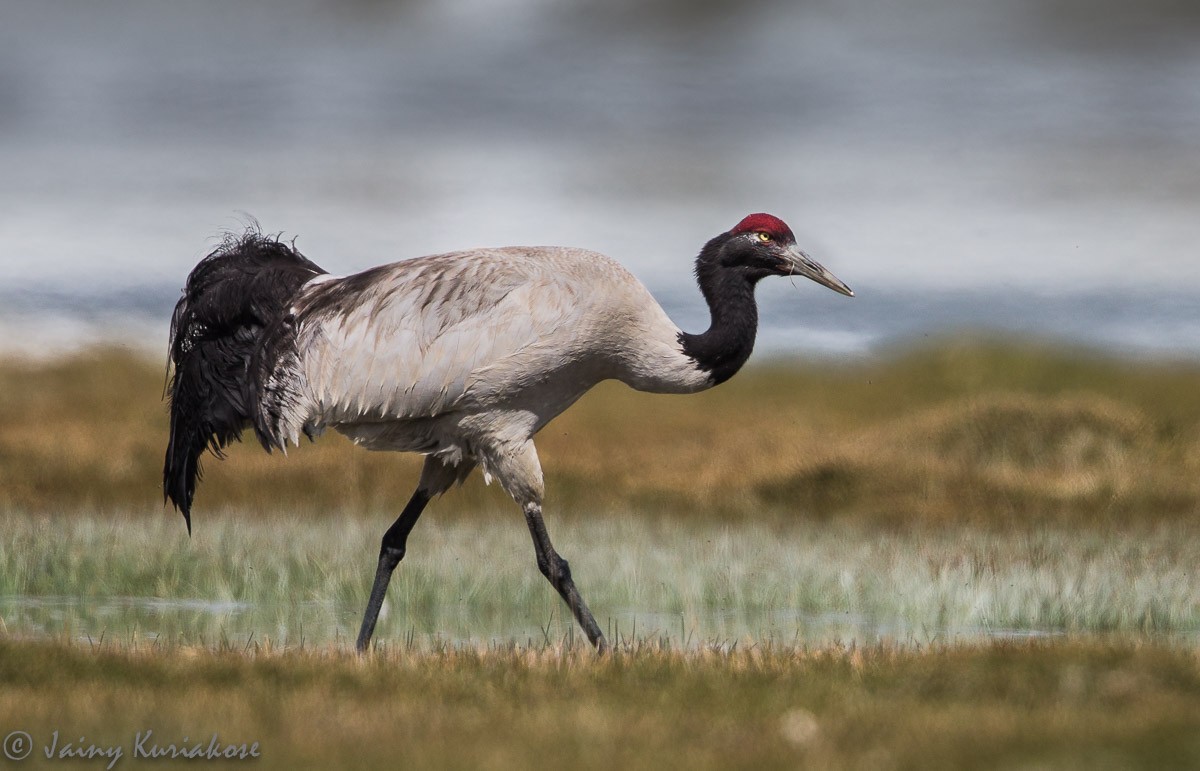
Held in mid-November in the courtyard of the beautiful Gangtey Goenpa, the Black-Necked Crane Festival honours the birds' annual return while doubling as one of the country's most heartfelt conservation initiatives. Local children sing, villagers perform, and dancers dressed as cranes mimic the birds' courtship — long necks arcing, wings sweeping wide — in a performance that is equal parts folk theatre and thanksgiving.
It's a smaller, gentler festival than the great Tsechus, and all the more moving for it: a whole valley turning out to thank a bird for coming home.
Can be combined with The Spirit of Bhutan: A Himalayan Journey.